
A tale of duty, silence, and the cost of being ignored
The Mill’s Secret Function
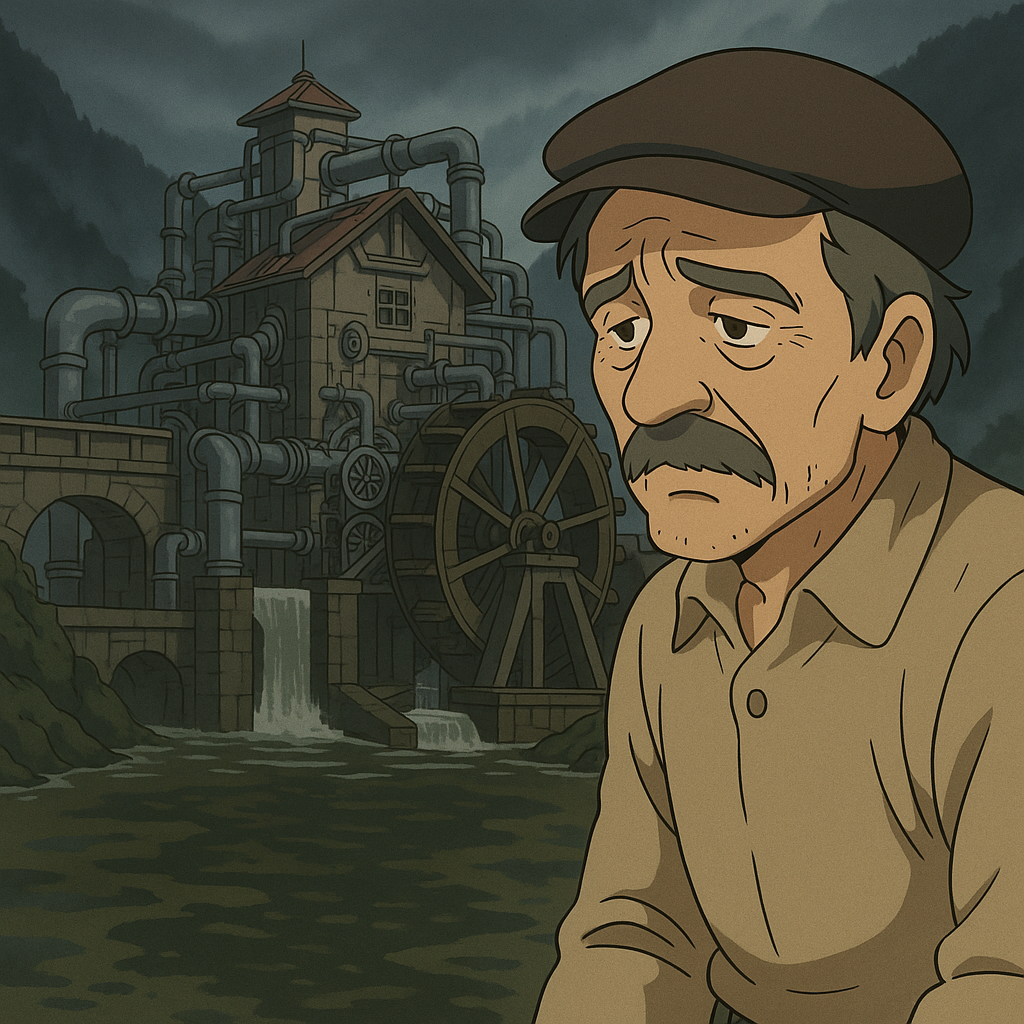
At the bottom of a misty, hidden valley, there stood a peculiar watermill. It didn’t grind wheat or press olives. Instead, it crushed osmiridium — a rare and dangerous metal hidden deep in the valley’s rocks.
The fine dust it produced was precious, used in high-precision tools and advanced medicines. But osmiridium was treacherous. If not handled with the utmost care, it could turn water into a deadly poison.
The mill’s true purpose went beyond production. It was tasked with protecting the river’s water — a shared lifeline for the valley’s villages. A single mistake could doom them all to sickness and death.
The Power Structure
A complex system of locks, gears, and channels regulated the water’s flow. Every drop was a balance; every oversight, a potential threat.
The mill’s organisation was rigid. At the top, in a dry, echoing tower, the Flow Directors made decisions without ever touching water.
Just below them, the Wheel Chiefs passed down commands, shielded by thick walls and layers of formality.
At the mill’s base, where water splashed onto boots and mud soaked through to the bone, the Mechanics worked. Their hands were rough, their eyes sharp, and they knew every hum and hesitation of the system.
Renzo, Voice of Common Sense
Among them was Renzo — twenty years on the job, a man who understood both the pressure of water and the dangers of osmiridium like no one else.
When orders from above seemed reckless, Renzo would speak out:
—“This isn’t safe. If we divert the water like this, the filtration system won’t hold. Osmiridium dust will poison the river, and the villages will suffer.”
But the reply never changed:
—“It’s not your job to question. Just follow orders.”
And if he pressed further:
—“Mind your place. There’s a chain of command here.”
Renzo’s jaw would tighten — not from fear, but from outrage. Why did his insight, forged in mud and sweat, count less than a decision made in a dry office? Why couldn’t they see the danger as clearly as he could see clean water turning to poison?
The Dangerous Order
One day, a new directive arrived: divert the river toward a distant project — one shrouded in vague promises but rumoured to bring fortunes.
Renzo knew the consequences. The filters would overflow. Osmiridium dust would seep into the river — the very one that served a care home and a clinic for the ill.
He spoke. He brought maps, calculations, proof of the coming disaster.
Still, the same answer:
—“It’s not your place to decide. Get back to work.”
The Rebellion
But Renzo didn’t back down. He did the unthinkable — he called a meeting at the mill’s base, between the roar of water and the whirr of gears.
He passed word quietly, machine to machine. The mechanics gathered, some anxious, others hopeful.
For the first time, they all spoke — rookies, veterans, even those who’d stayed silent out of fear. They shared ideas, imagined alternatives, dreamed of a mill where water was protected by all, not dictated from above.
For a brief moment, it felt as though the mill itself was listening. The wheels turned with a softer hum, as if grateful for their voices.
Even some Wheel Chiefs descended, uncomfortable but drawn by the power of those words. Renzo dared to believe the valley might change.
The Repression
But the tower stood firm. The Flow Directors saw the meeting as a threat.
They ordered it shut down. Wheel Chiefs who had listened were reprimanded. And Renzo? He was removed.
Banished to a minor role far from the mill’s core, where no one would hear him speak again.
The Disaster
The order went ahead. The water was diverted. As Renzo had warned, the filters failed.
Osmiridium dust leaked into the river, silent and invisible.
First came whispers — illnesses at the care centre, cloudy water in the villages, children coughing without reason.
Then came silence. A silence heavier than the tower’s.
The End
From his exile, Renzo watched the water lose its clarity.
He tried to raise his voice one final time, but no one would listen.
The mechanics, afraid, stayed quiet. The Wheel Chiefs looked away. The Directors kept issuing orders, as if nothing had happened.
On the mill’s timber frame, someone began to carve a sentence, but it was never finished:
“Respect is not obedience. It is listening…”
The letters were washed away by poisoned water. And the mill kept turning, indifferent, as the valley sank into the silence of a tragedy no one had dared to prevent.